A closer look at curriculum evaluation
This page introduces the purpose of curriculum evaluation and highlights how reflection, data, and school improvement work together to strengthen teaching and learning.

School Improvement
Instructional Review
Examining classroom practice, student needs, and program effectiveness.

Data Use
Evidence In Action
Using achievement data, feedback, and trends to guide better decisions.

Continuous Growth
Stronger Systems
Aligning curriculum, instruction, and support for lasting student success.
Overview
Why curriculum evaluation matters
Curriculum evaluation helps educators determine whether instructional materials, learning goals, assessments, and classroom experiences are meeting student needs. It supports thoughtful decision-making by identifying strengths, gaps, and opportunities for improvement across a school or program.
Student outcomes
Instructional alignment
Equity and access
Continuous improvement
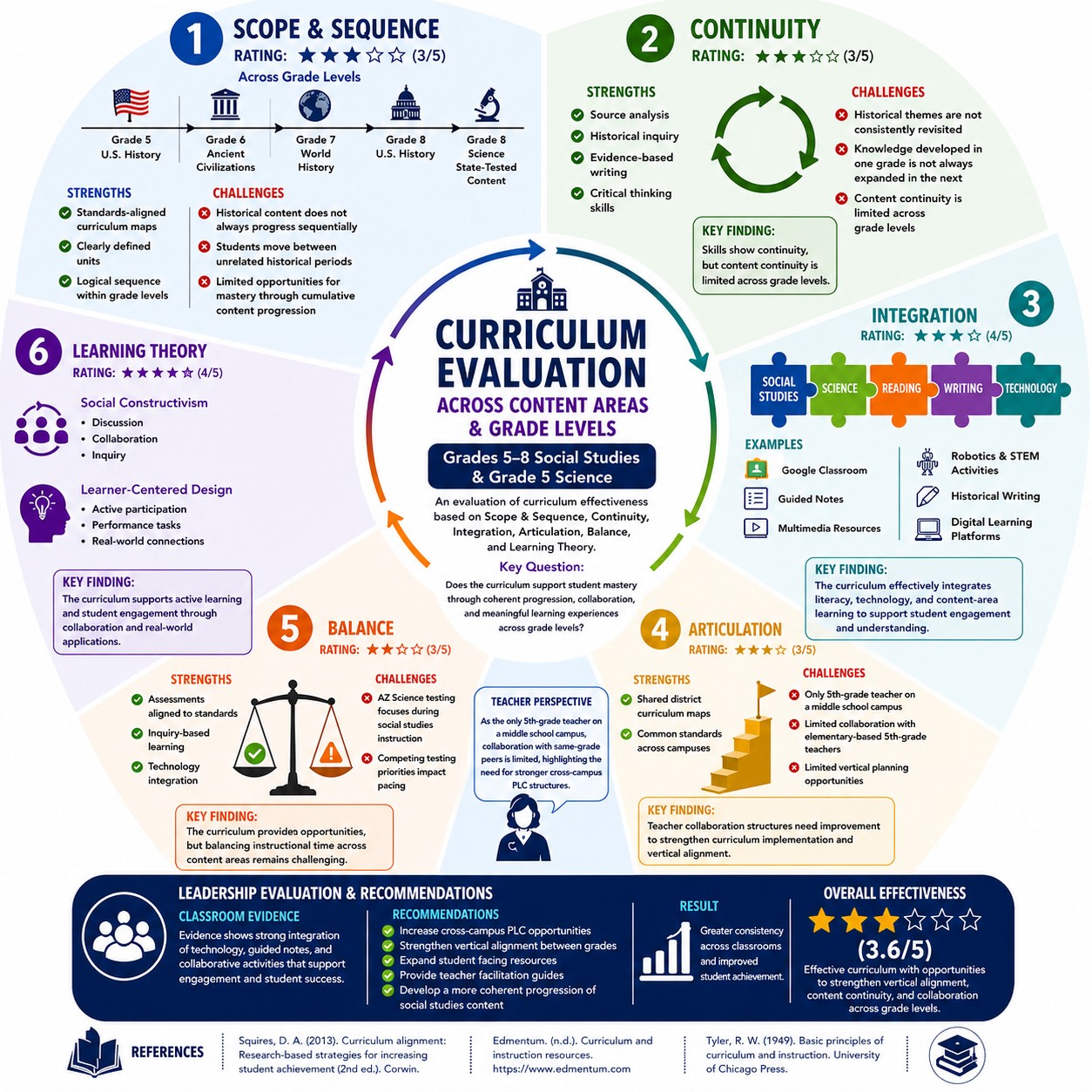
Infographic
Featured curriculum evaluation infographic
This infographic highlights a thoughtful approach to curriculum evaluation by organizing the process into clear focus areas such as alignment, instructional effectiveness, student outcomes, stakeholder feedback, and continuous improvement. It communicates how strong evaluation practices help educators make informed decisions that strengthen teaching and learning.
Featured below, the visual serves as a concise snapshot of the evaluation process and reflects my commitment to data-informed, student-centered curriculum leadership.
Next Step
Interested in curriculum leadership and school improvement?
Explore the rest of the portfolio to learn more about instructional philosophy, professional experience, and a data-driven approach to supporting student success.